Cassandra Meadows
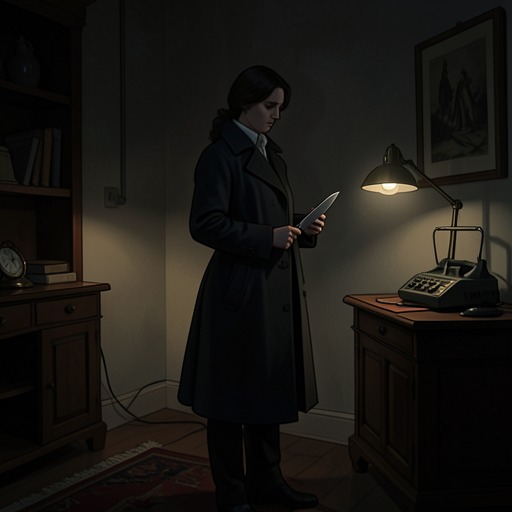
The InnocentCassandra Meadows is a young woman whose death is initially obscured by a false account of her disappearance. Her identity and recorded testimony eventually reveal that the supposed missing person was already dead—and that Clyde Rangor and Emma Lemay’s criminal operation involved the exploitation of underage girls. Though she appears only through the recollections of others and a videotape, Cassandra’s fate changes the meaning of the investigation and exposes the limits of the supposed code of silence among criminals.
Identity and the Missing-Person Inquiry
Cassandra enters the story through the search for a missing woman. A girl tells Kimmy Dale that she wants to find her mother’s killer and bring him to justice, explaining that she has some money but is not wealthy. The exchange establishes a personal motive behind the inquiry, while Kimmy’s pause before responding signals that what she is about to disclose is difficult. Cassandra is not named in this initial request, but the later investigation connects the search for a missing person to her identity and death.
The connection is clarified when Adam Yates reviews the autopsy report. The woman he had taken to be Cassandra was, he realizes, actually Cassandra Meadows, who had been dead all along. This recognition reverses the premise of the search: Cassandra did not vanish and remain beyond discovery. Her death had been concealed behind an assumed identity, and the person Yates thought he had identified as her was the real victim.
Death and Olivia’s Account
Olivia Hunter’s account supplies the immediate circumstances of Cassandra’s death. During the events at the room, Olivia fell onto Cassandra’s dead body. She later describes trying to move away from it while Clyde Rangor confronted her, demanding a tape she did not understand him to be asking for. The dead body is not incidental to the confrontation: it is the fact of Cassandra’s death, present in the room, that Olivia encounters while trying to survive Clyde’s attack.
Clyde’s violence also turns toward Emma Lemay when Emma asks him to stop. His assault on Emma gives Olivia an opportunity to act: she kicks Clyde below the knee, gets up, and moves toward a gun Kimmy kept in the room. Kimmy’s precautions—one small revolver in her boot and another gun under the mattress—become part of Olivia’s attempt to defend herself. Cassandra’s body is thus part of the scene in which Olivia confronts the danger surrounding the hidden tape, although the evidence does not establish that Cassandra herself participated in the confrontation.
The Videotape and Cassandra’s Age
The videotape makes Cassandra’s identity and vulnerability explicit. Watching the recording, Olivia recognizes her as Cassandra, and Kimmy confirms the identification with a nod. Olivia’s next question is whether Clyde had been recording customers. The footage therefore links Cassandra to a practice of recording sexual encounters, an element of the blackmail scheme revealed by the hidden tape.
On the recording, Cassandra says she is fifteen. Asked to confirm her age, she nods and presents a birth certificate, explaining that she had turned fifteen the previous week. The document is shown close to the camera; it identifies Mercy Medical Center in Nampa, Idaho, as her birthplace and names her parents as Mary and Sylvester. Cassandra also says that a customer, Mr. Alexander, had asked for someone fourteen but then decided she would be acceptable. These details establish that she was underage and that her age was known within the encounter being recorded.
Consequences and Narrative Significance
Cassandra’s case exposes the failure of the criminal underworld’s claimed confidentiality code. Len Friedman says that even among thieves there is supposedly a code, and that it had been broken. Yates later understands the practical basis beneath that claim: confidentiality protects business and clientele, not an abstract sense of honor. Clyde and Emma’s method of making more money had overridden that convention. The hidden recording, with Cassandra’s age made verifiable on camera, gives concrete force to that reversal.
Cassandra’s role is therefore central to the evidence even though the novel presents little of her life beyond the recording and the aftermath of her death. Her identification corrects Yates’s mistaken understanding of the autopsy, while her testimony establishes that the operation involved a fifteen-year-old and recorded customers. The investigation’s shift from a disappearance to a concealed death, and from an alleged criminal code to profitable exploitation, makes Cassandra’s brief presence a turning point in how the surrounding crimes are understood.